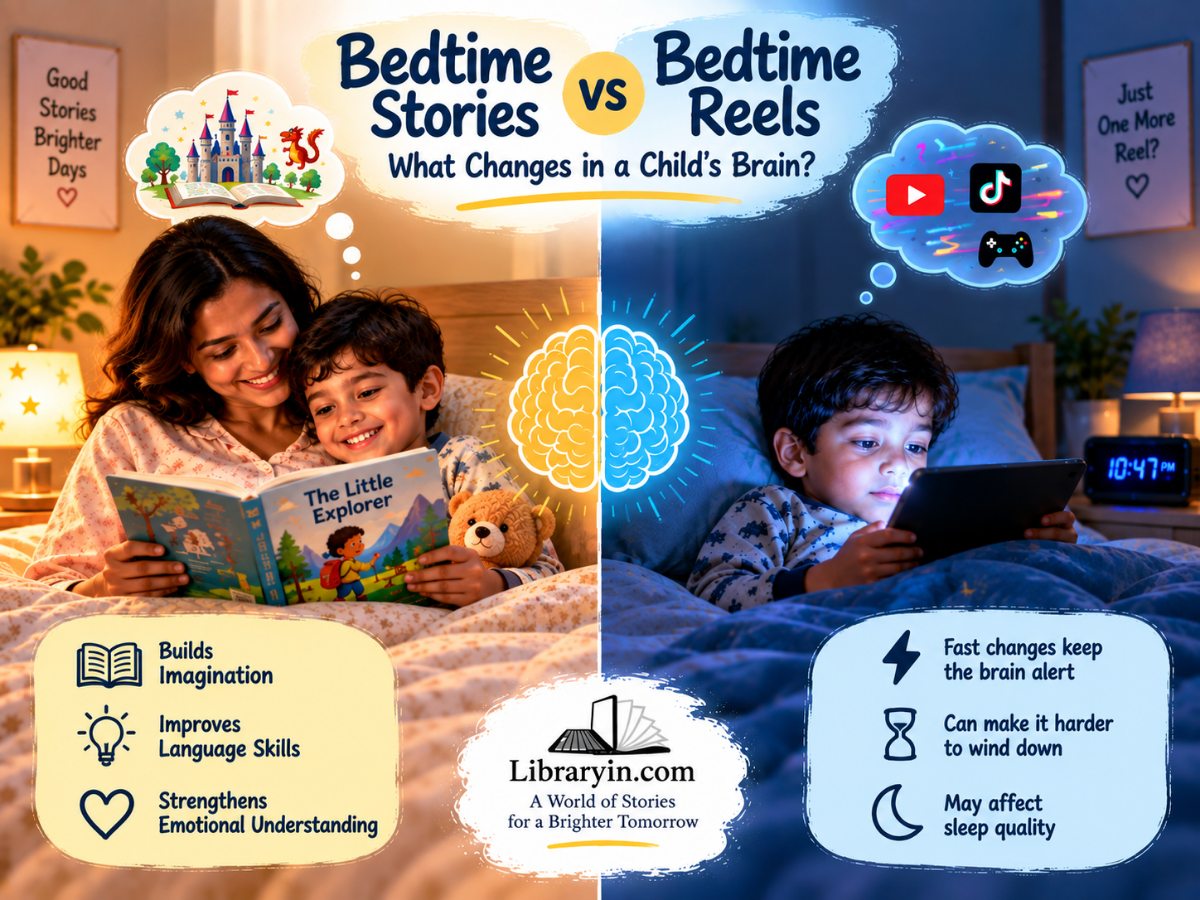
“Just one more reel.”
If you have a child at home, you have probably heard this at bedtime.
A few minutes of videos can easily turn into twenty minutes. The colours, sounds and quick changes keep children interested, even when they are supposed to be winding down for the night.
Now think about the other option: a parent sitting beside the bed and reading a story.
It feels very different.
When children listen to a story, they have to imagine what is happening. They picture the characters, follow the story, remember what happened earlier and wonder what might happen next. If you are reading together, there are usually little conversations too.
“Why did he do that?”
“What do you think will happen?”
“Can we read that part again?”
Those small conversations are part of what makes shared reading valuable for children's language and learning.
Reels don't ask children to imagine in quite the same way. Everything is already on the screen—moving pictures, sounds, characters and quick changes. And because screen use close to bedtime can interfere with sleep, replacing that last bit of screen time with a quiet story can be worth considering.
This doesn't mean children should never watch reels or use screens. Screens are part of everyday life now.
But bedtime is different.
The last few minutes of the day can be quieter. A story can slow things down, give a child something to think about, and create a little time between the busy day and sleep.
With Libraryin.com, parents can find stories for different ages and interests, making it easy to turn “one more reel” into “one more story.”
Sometimes, that may be the better way to end the day.