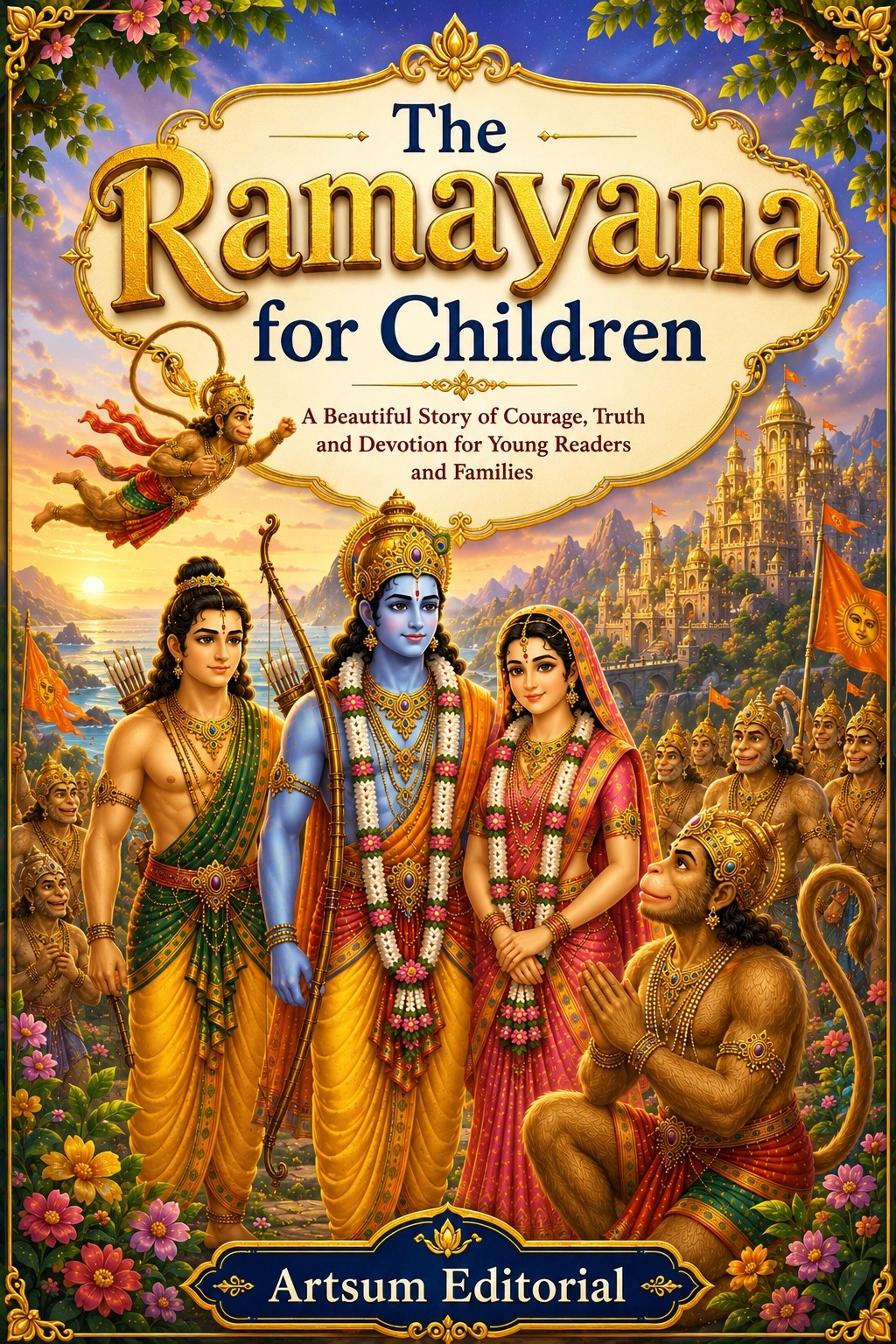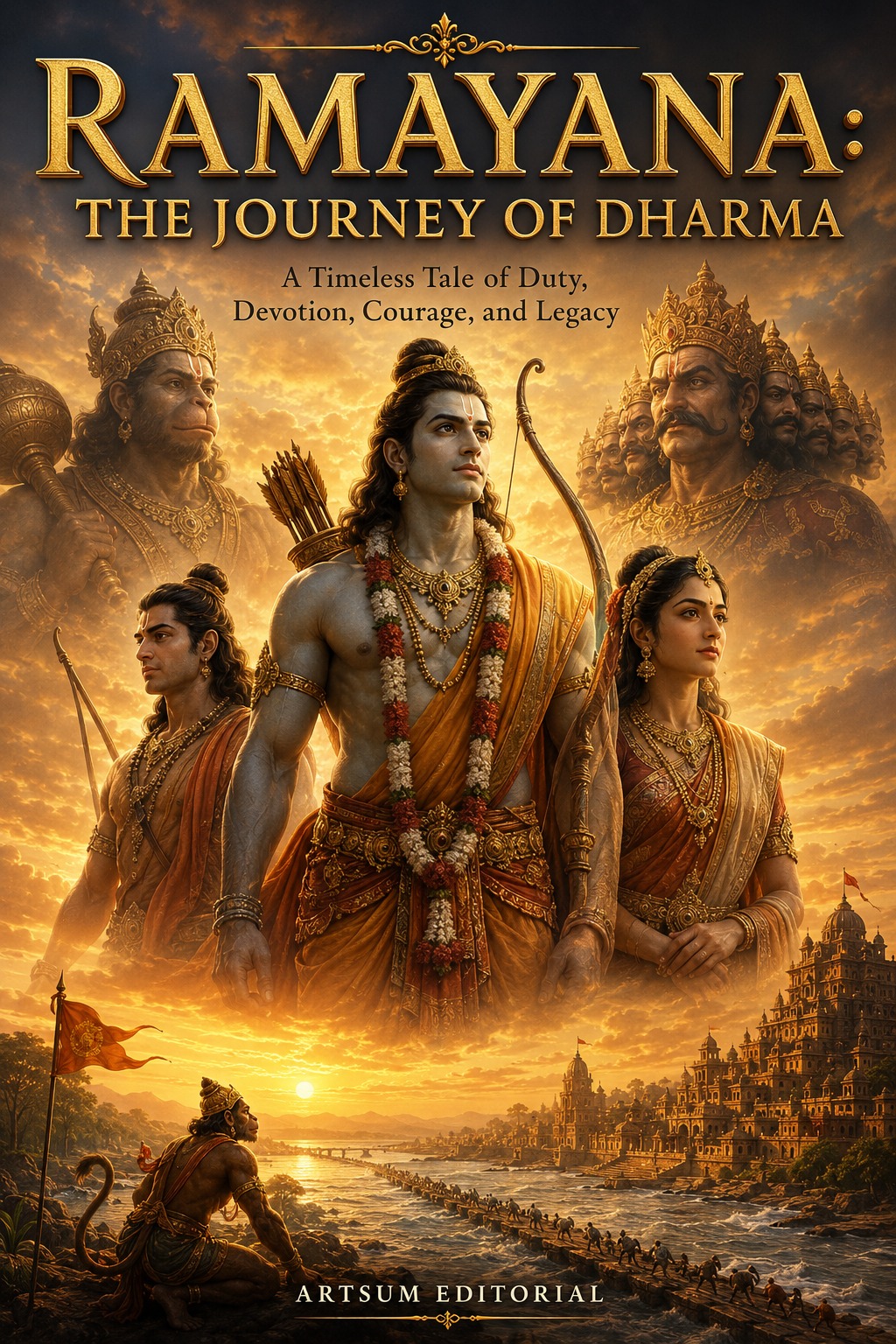

In the magnificent city of Ayodhya, where the Sarayu river runs like a hymn along the city's edge, a young prince named Rama lives with quiet purpose — beloved by servants and ministers alike, devoted to his family, and possessed of a stillness that those around him sense but cannot quite explain. When the ancient sage Vishwamitra arrives at the palace and asks for Rama by name, the boy's father, King Dasharatha, is gripped by fear. But Rama accepts without hesitation, and together with his fiercely loyal brother Lakshmana, he walks out through the great doors of Ayodhya into the waiting world.
Their journey through the forest is one of discovery — of ancient wisdom shared on dusty roads, of the deep bond between two brothers, and of the slow, unhurried process of understanding what strength truly means. When they arrive in Mithila, the wise and curious city of King Janaka, they find a kingdom holding its breath. A swayamvara has been called. Sita, Janaka's beloved daughter, is to choose her husband — but the condition her father has set stands before every suitor like an impossible wall. Pinaka, the divine bow of Lord Shiva himself, rests in the great hall of Mithila, and the man who can lift it, string it, and draw it will prove himself worthy.
One by one, the mightiest kings and warriors of the land approach the bow. One by one, they fail. The hall that began the morning in festivity grows quiet with a silence that settles into the bones. And then, in that silence, the sage Vishwamitra turns to Rama with a single quiet word — and a young man in travel-worn clothes walks to the front of a hall full of the world's most powerful men, and does what none of them could. Not because he was the strongest. Because he was the most worthy.
This is a story about the kind of strength that is not found in muscle or ambition, but in the long, patient work of becoming honestly and completely oneself. It is a story about a father's love, a brother's loyalty, a teacher's wisdom, and a moment in which the universe, quietly and completely, makes room for what is true.